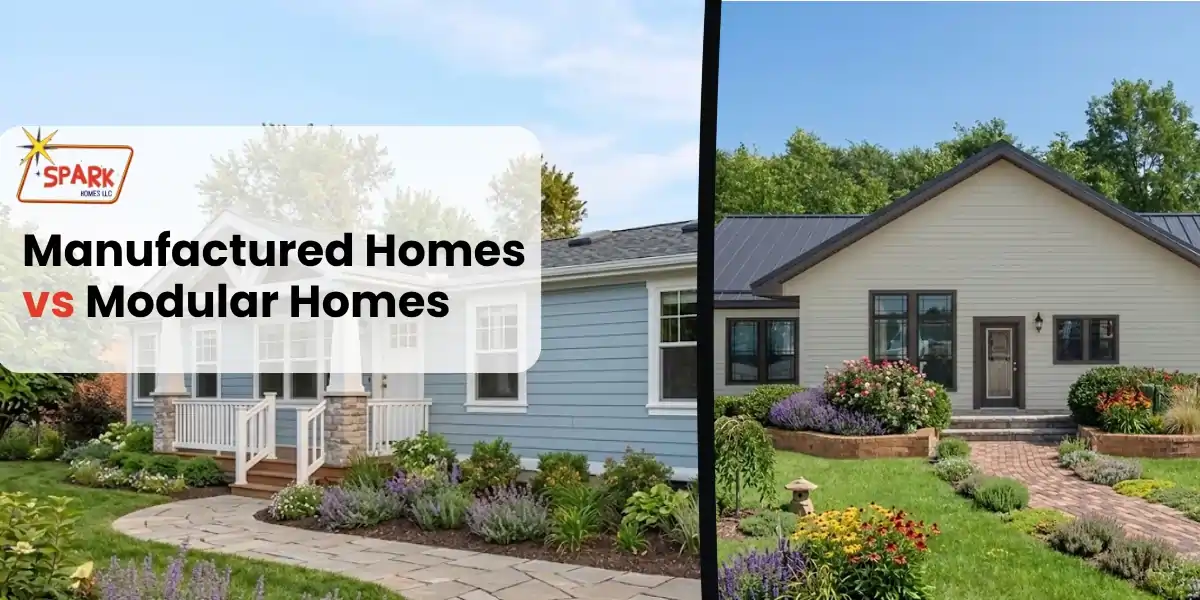
If you are comparing affordable housing options in Texas, you have likely come across modular homes and manufactured homes. While both are factory built homes constructed indoors and transported to a property, there are important differences that affect financing, property value, zoning, and long-term ownership.
Modular and manufactured homes are both prefabricated in factories, but they differ significantly in building codes and foundations. Modular homes follow local and state residential codes like traditional houses, while manufactured homes follow federal HUD standards and are built on a steel chassis.
Understanding these differences can help you choose the right home for your budget and future goals.
What Is a Modular Home?
A modular home is built in sections inside a factory and assembled on-site on a permanent foundation. These homes follow the International Residential Code (IRC), which is the same standard used for traditional site-built homes.
Because of this, modular homes often look and feel like regular houses. Buyers can customize layouts, finishes, porches, garages, and floor plans.
One major advantage is that modular homes are classified as real property once installed. This allows buyers to qualify for traditional mortgage financing more easily.
Permanent Modular Home Foundations also help improve long-term durability and resale value.
What Is a Manufactured Home?
A manufactured home is also factory built, but it follows HUD building standards instead of local residential codes.
These homes are built on a permanent steel chassis and delivered to the property in one or more sections. Many people still call them mobile homes, although homes built after 1976 are officially considered manufactured homes.
Manufactured homes are popular because they are affordable, fast to install, and available in single-wide, double-wide, and triple-wide layouts.
Buyers also have access to specialized programs for financing manufactured home purchases, including FHA and VA loans.
Key Differences
Many buyers search for “what’s the difference between a manufactured home and a modular home” because they can appear similar from the outside.
Here are the biggest differences:
| Feature | Modular Homes | Manufactured Homes |
| Building Code | IRC residential code | HUD Code |
| Foundation | Permanent foundation | Steel chassis with piers |
| Property Type | Real property | Often personal property |
| Financing | Conventional mortgages | Chattel or specialized loans |
| Value | Often appreciates | May depreciate |
| Zoning | Allowed in most residential zones | May face zoning restrictions |
In general, modular homes focus more on customization and long-term value, while manufactured homes prioritize affordability and faster installation.
Modular vs Manufactured Home Prices in Texas
Manufactured homes are usually more affordable upfront than modular homes.
A modular home often costs more because it requires permanent foundations, engineering, and additional site preparation. Buyers researching 2000 square ft modular home cost should also factor in utility hookups, permits, and land preparation.
Manufactured homes remain a strong option for buyers looking for lower monthly payments and faster move-in timelines.
Pros and Cons of Each Home Type
Advantages of Modular Homes
Modular homes offer strong long-term value and flexibility. Because they follow building standards, they often qualify for traditional mortgages and appreciate similarly to site-built homes.
They also provide:
- More customization options
- Better resale potential
- Permanent foundation systems
- Strong energy efficiency
- Wider zoning acceptance
Modern modular homes are also attractive to buyers who want custom-style living at a lower cost than fully site-built construction.
Disadvantages of Modular Homes
Despite the benefits, modular homes usually require higher upfront costs compared to manufactured homes.
Additional expenses may include:
- Permanent foundation installation
- Engineering requirements
- Land preparation
- Longer approval processes
Some customization options may also depend on the manufacturer’s available floor plans and designs.
Pros and Cons of Manufactured Homes
Advantages of Manufactured Homes
Manufactured homes remain one of the most affordable housing options in Texas.
Key benefits include:
- Lower purchase prices
- Faster installation
- Flexible floor plans
- Lower upfront costs
- Modern interior features
Many buyers also appreciate the ability to place manufactured homes in rural areas or dedicated Home Communities designed for factory-built housing.
Disadvantages of Manufactured Homes
Manufactured homes may face stricter zoning limitations depending on the city or county.
Financing options can also differ from traditional mortgages, especially when the home is not permanently attached to land.
In some cases, manufactured homes may depreciate faster than modular or site-built homes, although newer high-quality models often perform better in today’s market.
Why More Texas Buyers Are Choosing Manufactured Homes
Texas continues seeing strong demand for prefab homes because buyers want affordable housing with modern features.
Today’s manufactured homes include open layouts, upgraded kitchens, energy-efficient appliances, and stylish interiors.
Many buyers also choose planned Home Communities that offer affordable living and shared amenities. Communities like Clara Ridge Ranch Community continue attracting buyers looking for lower-cost homeownership options in Texas.
Frequently Asked Questions
What’s the main difference between modular and manufactured homes?
The biggest difference is the building standard and foundation. Modular homes follow local and state residential building codes and are placed on permanent foundations. Manufactured homes follow federal HUD standards and are built on a steel chassis for transport.
Are modular homes cheaper than manufactured homes?
No, modular homes usually cost more because they require permanent foundations and additional site work. However, both modular and manufactured homes are generally more affordable than traditional site-built homes.
Can I move a manufactured home after setup?
Yes, manufactured homes can be moved because they are built on a steel chassis. However, relocating a home after installation requires professional movers and additional setup costs.
Do modular or manufactured homes increase in value?
Modular homes often appreciate similarly to traditional homes when properly maintained. Manufactured homes may depreciate over time, although newer high-quality models can retain value better.
What is a prebuilt home?
A prebuilt or prefab home is constructed in a factory and then transported to the property for installation. Both modular and manufactured homes are types of prefab housing.
Conclusion
Choosing between a modular home and a manufactured home depends on your budget, financing goals, and long-term plans. Modular homes offers more custom options and permanence, while manufactured homes deliver maximum affordability and fast move-in timelines.
Both housing options provide a more affordable alternative to traditional construction while still offering modern layouts, energy efficient features, and flexible living solutions.
At Spark Homes Texas, we help Texas buyers find high-quality manufactured homes that fit their lifestyle and budget. Contact Spark Homes Texas today at +1 830-251-2110 to explore available homes, financing options, and land-home packages.
Leave a Reply
You must be logged in to post a comment.