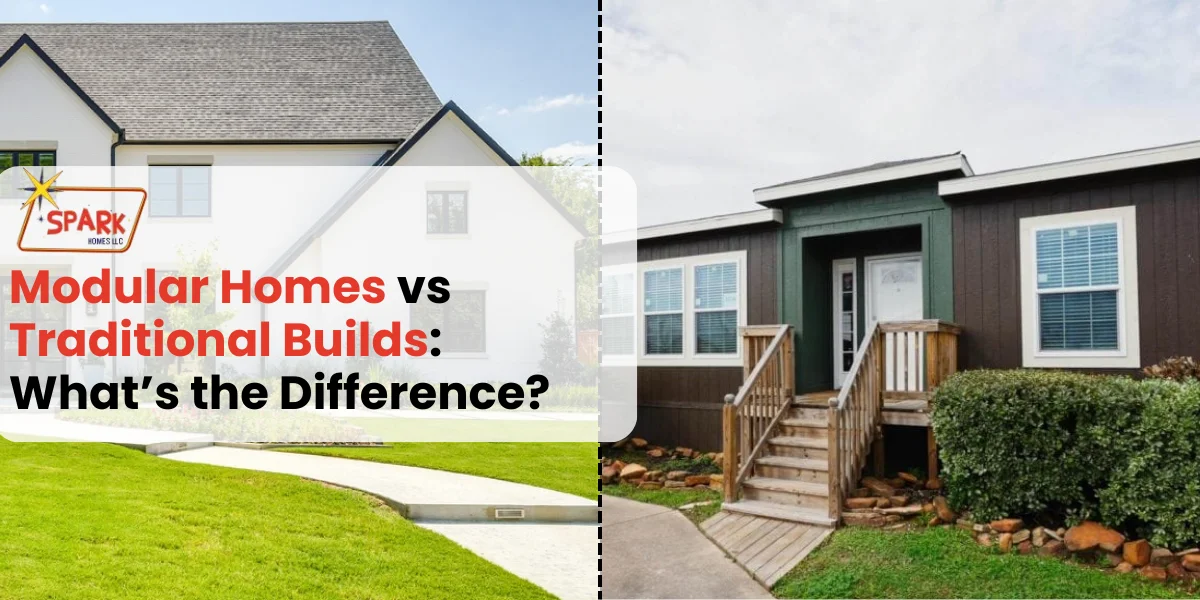
Choosing between modular and traditional construction is a major decision for Texas homebuyers. The choice affects more than how a home is built. It influences construction timelines, cost predictability, build consistency, resale value, and long-term equity, all of which directly shape the overall investment.
This article compares how modular and traditional builds perform from construction through ownership. It highlights where each option offers advantages, where limitations exist, and how those differences show up in real-world scenarios.
The goal is to help you determine which option best fits your land, budget, and timeline, so you can move forward with clarity and confidence.
Construction Process
One of the biggest differences between modular and traditional construction is how efficiently a home moves from planning to completion.
With modular construction, site preparation and home production happen at the same time. Factory construction typically takes 6 to 10 weeks, while foundation work and utilities are completed on-site. Once the modules are delivered, final assembly and finishing usually take 2 to 4 weeks, allowing many homes to be move-in ready within 3 to 4 months.
Traditional construction follows a step-by-step on-site process. From permitting and foundation work to framing, inspections, and interior finishes, timelines often range from 6 to 9 months, with delays caused by weather, inspections, or labor availability.
In residential communities such as Clara Ridge Ranch, these timeline differences often matter to buyers who want predictable scheduling and faster completion without prolonged on-site construction.
Cost Comparison
Cost is one of the most common reasons buyers compare modular homes and traditional homes. Instead of focusing only on averages, it’s more helpful to understand how costs are structured, where pricing differs, and where unexpected expenses are most likely to occur.
Modular home cost characteristics typically include:
- Factory efficiency that reduces labor hours
- Shorter build timelines that can lower financing and holding costs
- Pricing that is often clearer earlier in the process
- Average construction costs in Texas commonly ranging from $100 to $250 per square foot, depending on design, finishes, and site conditions
Traditional home cost characteristics typically include:
- On-site labor costs that can fluctuate based on availability
- Weather-related delays that may extend timelines and increase expenses
- Material price changes that affect the final cost
- Average construction costs in Texas often ranging from $150 to $300 per square foot, with higher variability based on customization and build duration.
In housing communities such as Pleasant Oaks MHC, longer timelines and labor fluctuations can make traditional construction costs less predictable, often requiring larger contingency budgets.
Build Quality and Design Differences
Both modular and traditional homes must meet building codes, but quality is achieved in different ways. Modular homes are built with reinforced framing in controlled factory environments, which supports consistent structural performance and reduces material exposure. Multiple inspections during production help maintain quality before the home reaches the site.
Traditional homes are built entirely on-site, where quality depends on crew experience, supervision, and weather conditions. Longer timelines can increase exposure to delays, which may affect consistency if construction is interrupted.
Design flexibility also differs. Modern modular homes offer a wide range of layouts and traditional design styles, but most decisions must be finalized earlier. Traditional construction allows changes during the build, appealing to buyers who prefer ongoing design adjustments.
Pros and Cons
Comparing modular and traditional site-built homes helps understand how each construction method performs in real-world conditions.
The differences are less about appearance and more about build process, timelines, cost control, and flexibility during construction.
Modular home advantages:
- Faster overall construction timelines
- Controlled indoor build environment
- Consistent quality checks
- More predictable pricing
Modular home limitations:
- Limited design changes once production begins
- Transportation logistics must be planned
Traditional home advantages:
- Greater flexibility during construction
- Familiar building approach
- Suitable for complex custom designs
Traditional home limitations:
- Longer and less predictable timelines
- Higher exposure to delays
- Less cost certainty
Resale Value and Home Equity
Questions about resale value and long-term equity are common when comparing modular and traditional homes. In most cases, resale performance depends less on how the home was built and more on factors such as location, property condition, lot ownership, and overall market demand.
Permanent modular homes in established communities often appraise similarly to traditional homes when placed on comparable lots. Appraisers and lenders typically focus on square footage, layout, construction quality, and how well the home fits surrounding properties rather than the construction method itself.
Home equity growth is also influenced by ongoing maintenance, upgrades, and neighborhood development. Modular homes that match local design standards and are properly maintained tend to perform competitively in resale markets. When aligned with buyer expectations and community standards, both modular and traditional homes can support strong long-term value.
Which Option Fits Texas Buyers Best
Modular homes are a strong choice for Texas buyers who want faster build times, cost predictability, and a more controlled construction process. They are especially well-suited for buyers building on owned land or outside major cities, where labor availability and weather can impact timelines.
Traditional homes may be a better fit for buyers who want greater design flexibility or complex custom features during construction. While timelines are typically longer, this approach allows changes to be made throughout the build.
Both options can offer long-term value when matched to the right site, budget, and planning style. The best choice depends on your timeline, financial priorities, and overall building goals.
Frequently Asked Questions
Do modular homes hold their value like traditional homes?
Yes. Modular homes built on permanent foundations and located on owned land often appraise and resell similarly to traditional homes in comparable areas.
Are modular homes allowed in Texas city limits and subdivisions?
Often yes, but zoning rules vary by location. Local building and community guidelines should always be reviewed first.
How long does it take to build a modular home compared to a traditional home?
Modular homes are often completed within 3 to 4 months, while traditional homes typically take 6 to 9 months or longer.
Are modular homes approved by banks and lenders?
Yes. Most lenders approve modular homes when they meet local building codes and are placed on permanent foundations.
Can a modular home be remodeled later?
Yes. Modular homes can be renovated or upgraded like traditional homes, provided structural changes are properly planned.
Conclusion
This comparison focuses on the real differences that affect cost, quality, and long-term value, without repeating basic definitions already covered elsewhere. Choosing between modular and traditional construction ultimately comes down to how much control, predictability, and flexibility you want throughout the build.
If you are comparing modular and traditional home options in Texas and want guidance based on local experience, SparkHomeTexas can help you evaluate the best path forward.
📞 Call +1 830-251-2110 to discuss your land, budget, and next steps with confidence.