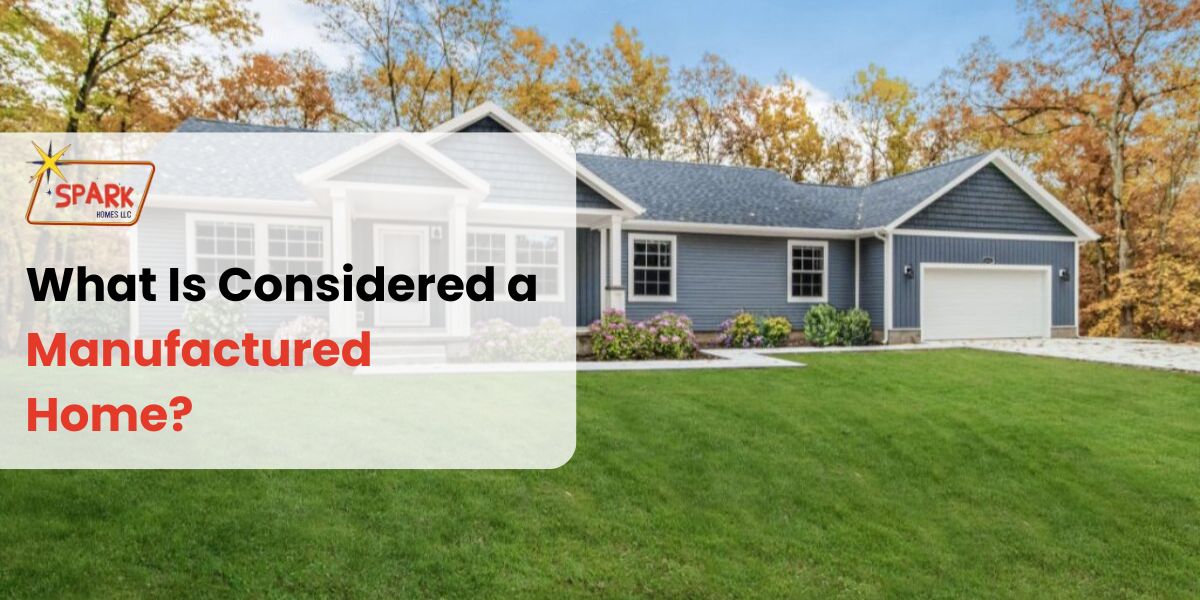
Have you ever heard someone say manufactured home and thought, “Wait… is that the same as a mobile home or a modular home?” You’re not alone. These words sound alike, but they don’t always mean the same thing.
In this guide, I’ll explain what a manufactured home really is in clear, everyday language. We’ll cover how it’s built, how it’s different from other homes, what makes it a good choice, and what challenges to expect.
By the end, you’ll know exactly what counts as a manufactured home and you’ll feel more confident if you’re thinking about buying or living in one.
What Is a Manufactured Home?
A manufactured home is a house that is built in a factory instead of being built on the land where people will live. After it’s built, the home is delivered on wheels to its final spot, like a piece of land or a housing community.
Key things that make it a manufactured home:
-
Built indoors in a factory.
-
Has a strong steel frame under it.
-
Transported to the living site.
-
Set up on the land and hooked up to water, power, and sewer.
Think of it like this: instead of building your house outside, piece by piece, the whole thing is built inside a big warehouse, protected from rain and weather. When it’s ready, it’s moved to your land.
Manufactured Home vs. Mobile Home
Many people think a manufactured home is just a new word for mobile home but there’s a difference.
-
Mobile homes were built before 1976. Back then, rules weren’t very strict, so quality and safety were not always guaranteed.
-
Manufactured homes are homes built after 1976. These follow stronger rules to make them safer, stronger, and more energy efficient.
So, if a home was built in 1975, it’s a mobile home. If it was built in 1980, it’s a manufactured home.
Manufactured vs. Modular vs. Site-Built Homes
To make things clearer, let’s compare three types of homes:
Manufactured Home
-
Built in a factory.
-
Has a steel frame.
-
Delivered on wheels.
-
Can sometimes be moved again (though it’s not common).
Modular Home
-
Also built in a factory, but in sections.
-
Delivered to land and put together like puzzle pieces.
-
Built to the same rules as regular houses.
-
Permanent once installed.
Site-Built Home
-
Built right on the land, from the ground up.
-
Uses materials like wood, brick, and concrete.
-
Permanent foundation, cannot be moved.
How Are Manufactured Homes Built?
Here’s the step-by-step process:
-
Design – Decide layout, size, and style.
-
Steel Frame – Build the strong frame that holds everything together.
-
Floors, Walls, and Roof – Add the structure inside the factory.
-
Plumbing and Wiring – Install pipes, wires, and outlets.
-
Interior Work – Finish floors, cabinets, paint, and lighting.
-
Delivery – Wrap the home and move it on wheels.
-
Installation – Place it on the land, anchor it, and connect utilities.
This makes the building process faster and cheaper than a house built outside on land.
What Do Manufactured Homes Look Like?
Modern manufactured homes often look just like traditional houses. They can include:
-
Bedrooms and bathrooms.
-
Kitchens with full appliances.
-
Living rooms and dining rooms.
-
Heating and cooling systems.
-
Add-ons like porches, decks, and garages.
They can come in single-wide, double-wide, or even triple-wide sizes depending on how much space you want.
Why People Choose Manufactured Homes
-
Lower cost – Usually more affordable than a site-built home.
-
Faster build time – Made in weeks instead of months.
-
Custom options – Pick your floor plan and finishes.
-
Energy efficient – Newer models save on utilities.
-
Less waste – Factory construction uses materials more efficiently.
Challenges to Keep in Mind
-
Financing – Not all banks offer the same loans for them.
-
Resale value – May not rise in price like traditional houses.
-
Zoning rules – Some neighborhoods don’t allow them.
-
Moving costs – Moving a manufactured home later is hard and costly.
Easy Examples
-
Example 1: A house built in 1982 in a factory and delivered on wheels → Manufactured home.
-
Example 2: A house built in a factory in sections and assembled on-site like a normal house → Modular home.
-
Example 3: A house built in 1970 → Mobile home.
FAQs
Q: Can you move a manufactured home later?
A: Yes, but it’s expensive. Most stay in one place.
Q: How long do they last?
A: With good care, 40–50 years or more.
Q: Can I get a mortgage for one?
A: If it’s on land you own and on a permanent foundation, yes. Otherwise, you might need a special loan.
Q: Are they safe?
A: Yes. Homes built after 1976 meet strong safety codes.
Q: Do they lose value?
A: Sometimes, but homes on owned land hold value better.
Lifestyle Benefits
Manufactured homes are popular for people who want affordable, comfortable living. Retirees like them for easy maintenance. Young families choose them to save money. Some people enjoy them in rural areas, while others prefer community living with shared pools, clubhouses, or parks.
Tips Before Buying
-
Check the year built — must be after 1976.
-
Inspect carefully for any damage.
-
Talk to lenders about financing options.
-
Check local rules before placing a home.
-
If possible, place it on land you own.
A manufactured home is a factory-built house with a steel frame, delivered on wheels, and set up for permanent living. It’s not the same as an old mobile home or a modular home.
If you want a home that’s affordable, customizable, and quick to build, a manufactured home could be the perfect choice. Just make sure you understand the rules, financing, and long-term care before you decide.
At Spark Homes Texas, we’re here to make home ownership simple. If you’re interested in learning more about manufactured homes or exploring options that fit your budget, let’s talk.
👉 Contact us +1 830-251-2110 today and let us help you find the home that’s right for you.
Leave a Reply
You must be logged in to post a comment.