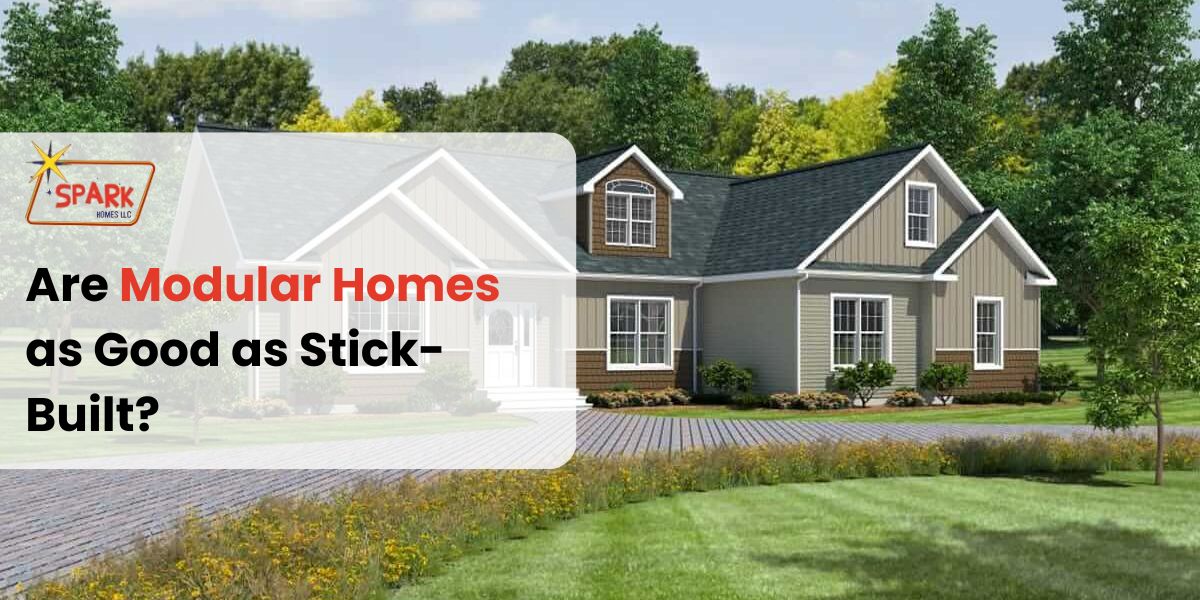
When comparing a new home, many Texas buyers ask the same question: are modular homes as good as stick-built homes? The short answer is yes. A well-designed and properly installed modular home can provide comparable quality, durability, comfort, and long-term value to a traditional stick-built home.
The main difference is not whether one is a “real” home and the other is not. It is how and where the home is constructed. Modular homes are built in sections inside a controlled factory environment and then transported to the property for final installation. Stick-built homes are constructed primarily at the building site.
For buyers considering modular homes in Texas, understanding these differences can make it easier to compare construction quality, cost, timelines, customization, and long-term value.
Modular Homes vs Stick-Built Homes: What’s the Difference?
The biggest difference between modular and stick-built construction is the building process.
A stick-built home, also called a site-built home, is constructed directly on the property. Workers assemble the framing, roof, walls, plumbing, electrical systems, insulation, and interior finishes at the site. This approach gives builders considerable flexibility throughout the construction process.
A modular home is constructed in multiple sections at a manufacturing facility. These sections are built according to the home’s design and applicable building requirements before being transported to the property. Once they arrive, the modules are assembled and completed on a permanent foundation.
This distinction is important because modular homes should not be confused with manufactured homes. Modular construction and manufactured housing follow different standards and construction processes.
For a buyer researching Site Built vs Modular Homes, the important takeaway is that both are designed to function as permanent residential properties. The primary difference is the location and method of construction.
Modular Home Quality and Durability
Quality is one of the biggest concerns when comparing modular homes vs stick built homes. Some buyers assume that a home constructed in a factory cannot be as strong or durable as one built at the property. That assumption does not accurately reflect how modern modular construction works.
Factory construction provides a controlled environment where materials are protected from many weather conditions during production. Workers follow repeatable construction procedures, and major components can be assembled without the interruptions that sometimes occur on an outdoor construction site.
This does not mean every modular home is automatically better than every stick-built home. Quality depends on the manufacturer, materials, engineering, workmanship, transportation, foundation, and final installation.
The same principle applies to a stick-built house. A well-built site home can provide excellent durability, while poor workmanship or inadequate maintenance can create problems regardless of construction method.
Do modular homes last as long as stick-built?
A properly constructed and maintained modular home can last for decades, just like a traditional site-built home.
Longevity depends on factors such as construction quality, foundation performance, moisture control, roofing, exterior maintenance, plumbing, electrical systems, HVAC maintenance, and the local climate.
In other words, the construction method alone does not determine how long the home will last.
Modular vs Stick-Built Cost
Cost is one of the most important factors when deciding between these two construction methods.
Modular construction can provide cost advantages because a large portion of the home is completed in a controlled manufacturing environment. Factory production can reduce certain labor inefficiencies and minimize weather-related interruptions.
However, saying that modular homes are always cheaper than stick-built homes would be misleading.
The total project cost can include:
- Home and interior finishes
- Foundation
- Land preparation
- Transportation
- Installation
- Utility connections
- Permits and inspections
- Driveway and site access
- Landscaping
- Custom upgrades
This is why buyers comparing modular home vs stick-built cost should look beyond the advertised price of the house itself.
A lower starting price does not necessarily mean a lower final project cost. Likewise, a higher-priced home may offer features, finishes, or construction efficiencies that provide better value over time.
If you are planning a modular home project, reviewing modular home cost before choosing a floor plan can help you create a more realistic budget.
Construction Timeline and Building Process
Construction time is another area where modular homes can offer an advantage.
With a modular home, the house can be constructed inside the factory while other work, such as foundation preparation, is being completed at the property. This can allow multiple stages of the project to move forward at the same time.
Stick-built construction takes place primarily at the property, so the project can be affected by weather, material deliveries, subcontractor schedules, inspections, and other site-related delays.
The exact timeline varies depending on the home design, manufacturer, permitting requirements, site conditions, foundation, and installation process. A highly customized modular home may also require more planning than a standard floor plan.
Still, the controlled factory environment can make the overall construction process more predictable.
For buyers comparing Modular Homes vs Traditional Builds, this difference in construction workflow is often one of the most practical advantages of modular construction.
Customization and Floor Plan Options
Another common misconception is that modular homes are limited to basic designs.
Modern modular homes can offer a wide range of floor plans, exterior styles, interior finishes, kitchens, bathrooms, bedrooms, and other design options. Buyers can often personalize the home according to their space requirements and preferences.
However, modular construction does have practical design limitations. Extremely complex architecture, unusual structural layouts, or challenging building sites may be easier to handle with traditional site-built construction.
For most homeowners, though, modular construction provides enough flexibility to create a comfortable and attractive home.
When comparing modular home floor plans, consider how the layout works with your land, household size, furniture, storage needs, and long-term plans rather than focusing only on the number of bedrooms or square footage.
Energy Efficiency and Long-Term Comfort
Energy efficiency depends on the home’s insulation, windows, doors, HVAC system, air sealing, and overall design.
One potential advantage of factory construction is the controlled environment in which insulation and other building components are installed. Consistent production methods can help create a well-assembled building envelope.
This can be especially important in Texas, where homeowners deal with high summer temperatures and significant cooling demand.
A modular home with appropriate insulation, efficient windows, and a properly sized HVAC system can provide comfortable indoor temperatures while helping manage energy consumption.
However, buyers should compare the actual specifications of each home rather than assuming a modular home will automatically be more energy efficient than a stick-built house.
Modular Home Value and Resale Potential
Long-term value is another important consideration when comparing modular vs stick-built homes.
A modular home’s value depends on many of the same factors that influence any residential property, including:
- Location
- Land value
- Home condition
- Floor plan
- Construction quality
- Local housing demand
- Property improvements
- Comparable home sales
A well-maintained modular home in a desirable location can have strong resale potential.
The key is to consider the home as part of the overall property rather than focusing only on the fact that it was factory-built.
For buyers interested in the long-term financial side of the decision, understanding home appreciation and local property demand can be just as important as the initial construction price.
On-Frame vs Off-Frame Modular Homes
Buyers researching modular construction may also come across the terms on-frame and off-frame modular.
These terms generally describe how a modular structure is supported and installed. The exact construction method can vary by manufacturer and home design, so buyers should ask the builder how a particular model is classified and installed.
It is important not to assume that on-frame automatically means manufactured housing or that off-frame automatically means higher quality.
If you are comparing on frame vs off frame modular homes, ask about the foundation system, transportation method, applicable construction requirements, installation process, and what is included in the final price.
Understanding these details before purchasing can prevent confusion later in the project.
Modular vs Stick-Built: Pros and Cons
Both construction methods have advantages, and the right choice depends on your property and priorities.
| Factor | Modular Home | Stick-Built Home |
| Construction | Factory-built sections | Built primarily on-site |
| Weather exposure | Lower during factory construction | Higher |
| Construction timeline | Often more predictable | Can vary with site conditions |
| Customization | High | Very high |
| Site flexibility | Depends on transportation and access | Generally flexible |
| Cost | Can be competitive | Varies by project |
| Quality control | Controlled factory environment | Primarily managed on-site |
| Design options | Wide range | Very broad |
| Long-term value | Depends on property and market | Depends on property and market |
Neither option is automatically better for every buyer. The quality of the builder and the suitability of the home for the property are more important than choosing based on the construction label alone.
Which Home Is Right for You?
The better choice depends on your budget, property, design preferences, and construction priorities.
A modular home may be a good fit if you want a controlled construction process, potentially faster completion, modern floor plans, and less weather exposure during production.
A stick-built home may make more sense if you want maximum flexibility for highly customized architecture, unusual designs, or a challenging property where on-site construction provides more options.
For Texas buyers, the decision should also consider land preparation, foundation requirements, transportation access, utilities, local requirements, and the total cost of completing the home.
The best comparison is not simply modular or stick-built. It is which specific home, builder, design, and construction process makes the most sense for your property and long-term goals.
Frequently Asked Questions
Are modular homes as good as stick-built?
Yes. A properly designed, constructed, transported, and installed modular home can offer comparable quality, durability, comfort, and long-term value to a stick-built home.
Are modular homes cheaper than stick-built?
They can be, but not in every project. Compare the complete cost, including the home, foundation, site preparation, transportation, installation, utilities, permits, and upgrades.
Is a modular home considered stick-built?
No. Modular homes and stick-built homes use different construction processes. Modular homes are primarily constructed in sections away from the property, while stick-built homes are assembled directly on the building site.
Do modular homes hold their value?
They can. Resale value depends on location, condition, land, construction quality, local demand, and comparable properties rather than construction method alone.
Can modular homes be customized?
Yes. Modern modular homes can offer different floor plans, finishes, exterior styles, kitchens, bathrooms, bedrooms, and other customization options, although highly complex designs may have additional limitations.
Conclusion
So, are modular homes as good as stick-built homes? For many buyers, yes. A well-built modular home can offer comparable quality, durability, comfort, customization, and long-term value to a traditional stick-built home.
The key difference is the construction process. Modular homes are built in sections inside a controlled factory environment and then transported and installed on a permanent foundation. This can provide a more controlled building process while reducing exposure to weather during construction.
When comparing modular homes vs stick-built homes, look beyond the construction method. Consider the home’s specifications, builder experience, foundation, installation process, total cost, floor plan, property location, and long-term goals.
If you’re considering modular homes in Texas, Spark Homes can help you explore your options and find a home that fits your land, budget, lifestyle, and long-term plans. Call (830) 251-2110 to discuss your modular home project and get started.
Leave a Reply
You must be logged in to post a comment.